Raised Bed Costs: The Water and Soil Bill Before Payback
A 4 × 8 foot raised bed can look inexpensive until you price the soil, the water line, the mulch, and the time spent keeping its exposed edges from drying. The practical answer is blunt: a raised bed is not automatically a water-saving investment. It earns its keep when the box solves a real problem—poor ground, access, compaction, contamination, or the need for intensive spacing—not merely because the soil is above ground level.
Think in two paybacks. Cash payback means the bed eventually costs less than buying equivalent produce or replacing failed crops. Practical payback means you get earlier planting, more reliable harvests, easier access, or fewer hours fighting bad soil. The second kind is usually easier to achieve.
For a home grower, a deep isolated box filled with purchased mix may not repay itself in cash, particularly if it also needs frequent irrigation and annual top-ups. That isn't a reason to reject every raised bed. It is a reason to price the whole system before cutting timber.
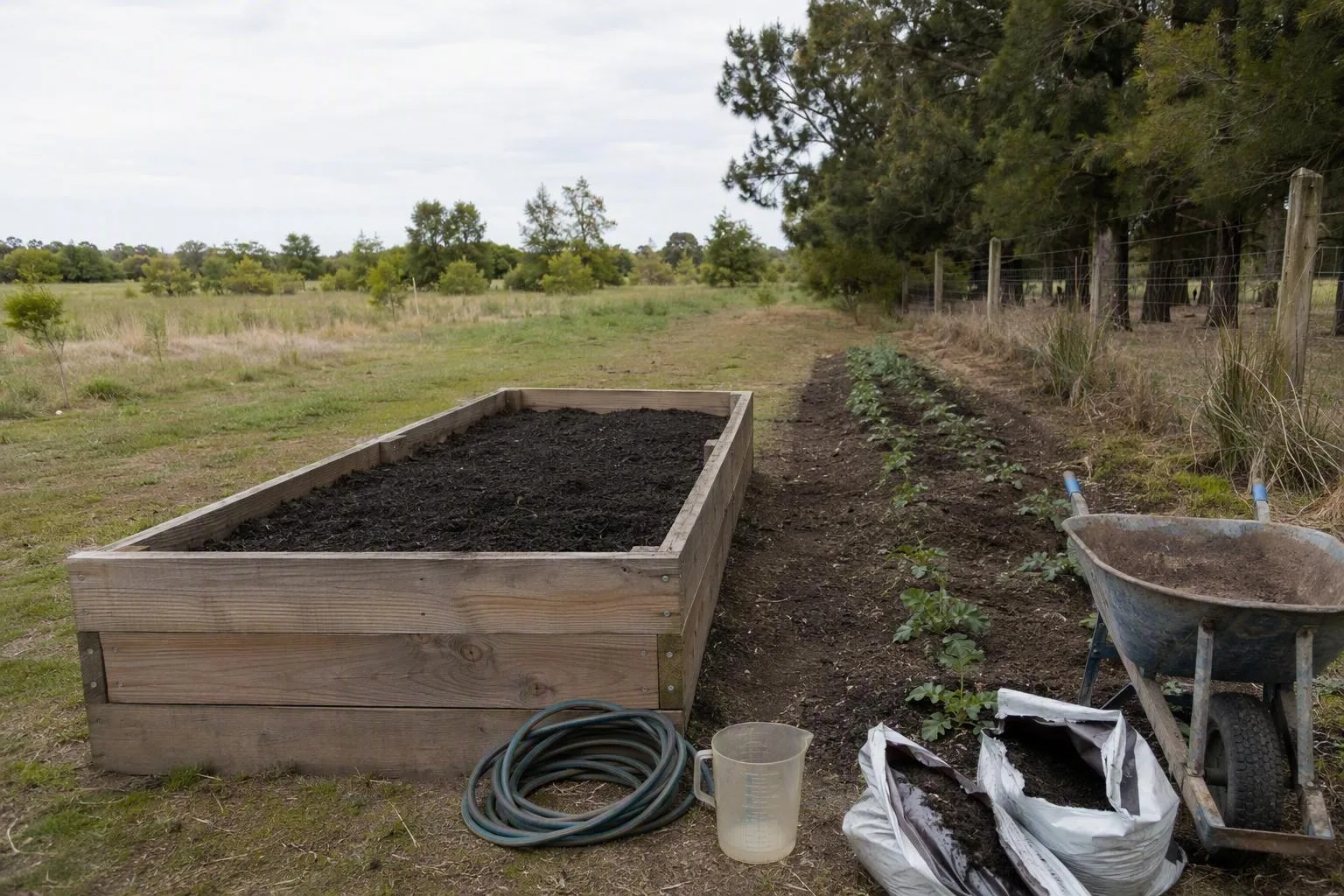
The bill starts before the first seed goes in
Separate the installation bill from the maintenance bill. Installation includes the frame or retaining wall, fasteners, delivery, soil or compost, irrigation hardware, and any base preparation. Maintenance includes water, mulch, compost, replacement boards, repairs to a timer or hose, and your labor.
That distinction changes the decision. A shallow frame sitting on workable native soil may add little soil cost and only modestly alter irrigation. A 16-inch-deep box built over compacted ground is a different structure: it contains a large volume of imported material and creates a taller, more exposed drying surface.
Don't calculate payback from the price of the vegetables alone. Include the crops the bed replaces, the harvest you actually use, and the cost of the alternative. If the alternative is an in-ground row that already produces well, the raised bed has to deliver a specific improvement. If the alternative is a wet, compacted patch where seedlings repeatedly fail, the comparison is more favorable from the start.
My starting judgment is blunt: don't build a deep raised bed to solve a shallow soil problem. If the top 6 inches are poor but the ground below drains and roots can enter it, a shallow frame plus compost is usually a more sensible first experiment than importing a tall column of mix.
Price the bed as three systems, not one box
Price the bed as three separate systems: the container, the growing medium, and the water supply. Each has a different failure pattern.
- Container: untreated timber has a low entry cost but a shorter service life in persistently wet contact with soil. Rot-resistant lumber costs more and may last longer. Galvanized metal, masonry, stone, and reclaimed materials shift the balance toward durability, heat behavior, weight, and labor.
- Growing medium: bulk soil may be economical where delivery is practical. Bagged material is easier to handle in small quantities but can become expensive at deep-bed volumes. Compost is useful as part of a blend or surface dressing, not as an automatic substitute for mineral soil.
- Water system: a hose is cheap to begin with but makes every watering event manual. Soaker hose or drip line adds hardware and setup time, then changes how evenly water reaches the root zone.
Reclaimed boards can reduce the cash bill, but inspect them for unknown treatments, oil contamination, rot, and embedded nails. A cheap material that needs rebuilding after one wet winter isn't cheap in the ledger that matters. With metal or masonry, consider the edge as part of the irrigation system: a small bed has a relatively large perimeter compared with its planted area, so more soil sits beside a surface that can heat, cool, or dry independently of the center.
This is where raised beds versus in-ground beds: choosing for drainage, drought, and soil quality becomes a useful comparison rather than a matter of taste. The right question is not “Which looks better?” It is “Which structure changes the limiting condition on this plot?”
Soil volume is where the arithmetic gets underestimated
Calculate volume before shopping. Multiply length by width by depth, using the same unit throughout. A 4 × 8 foot bed filled to 1 foot has 32 cubic feet of internal volume. At 16 inches, the same footprint holds about 42.7 cubic feet. That extra 4 inches adds roughly one-third more material, even though the bed still occupies the same floor area.
Then decide whether your supplier sells loose material by cubic foot, cubic yard, or bags labeled by volume. One cubic yard contains 27 cubic feet, so the 1-foot example is a little over 1 cubic yard before settling, spillage, and headspace. If you buy bags, divide the required cubic feet by the volume printed on the bag. Do not estimate from the number of bags used for a patio container.
The initial fill and the annual top-up are separate calculations. A new mix can settle as air spaces collapse and organic material decomposes. Roots, earthworms, and wetting also change its structure. A small top-up after the first season can be normal; repeatedly adding large quantities means the original mix was too rich in unstable organic matter, the bed is eroding, or material is being removed with roots and harvests.
A shallow bed over open soil behaves differently from an isolated deep bed. Roots can move below the frame in the first case, allowing the native soil to contribute water and minerals. In the second, the imported volume is the complete root environment, so its texture and water-holding capacity matter much more. Read How deep should a raised bed be for vegetables? before treating extra depth as free insurance.
The first-season water comparison: raised bed versus in-ground row
Raised beds can use more water than an in-ground row during a dry spell, especially when the bed is deep, the sides are exposed, the mix is loose, and the surface is bare. Drainage is useful after rain, but drainage is not the same as water efficiency. Water that leaves a saturated root zone quickly may be preventing waterlogging—or it may be leaving before roots can use it.
Compare like with like. A mulched bed with close plant spacing and a drip line may stay productive on a similar or smaller watering schedule than a bare in-ground row. A newly filled box with coarse mix and unprotected sidewalls can dry at the edges while the center still feels damp. Sandy native soil, a windy site, hot masonry, and a shallow-rooted crop all push the calculation toward more frequent irrigation.
Use a simple log rather than relying on the phrase “raised beds need more water.” During a dry period, record for both systems:
- date and duration of each watering event;
- which method supplied the water, such as hose, can, or drip line;
- rainfall if you can measure it consistently;
- soil moisture 2 to 3 inches below the surface before watering;
- visible wilt by late afternoon and recovery by the following morning.
Keep the crop and mulch condition comparable. If one bed contains lettuce and the other contains established onions, the comparison is about crop demand, not bed design. A bed that is meaningfully smaller in water demand but consistently watered is more useful than one that occasionally receives a large rescue soaking.
For a practical irrigation reference, look for agricultural water-use guidance on drip irrigation, mulch, evapotranspiration, and irrigation scheduling. The useful principle is to water the root zone when it needs water, not to defend a fixed calendar interval.
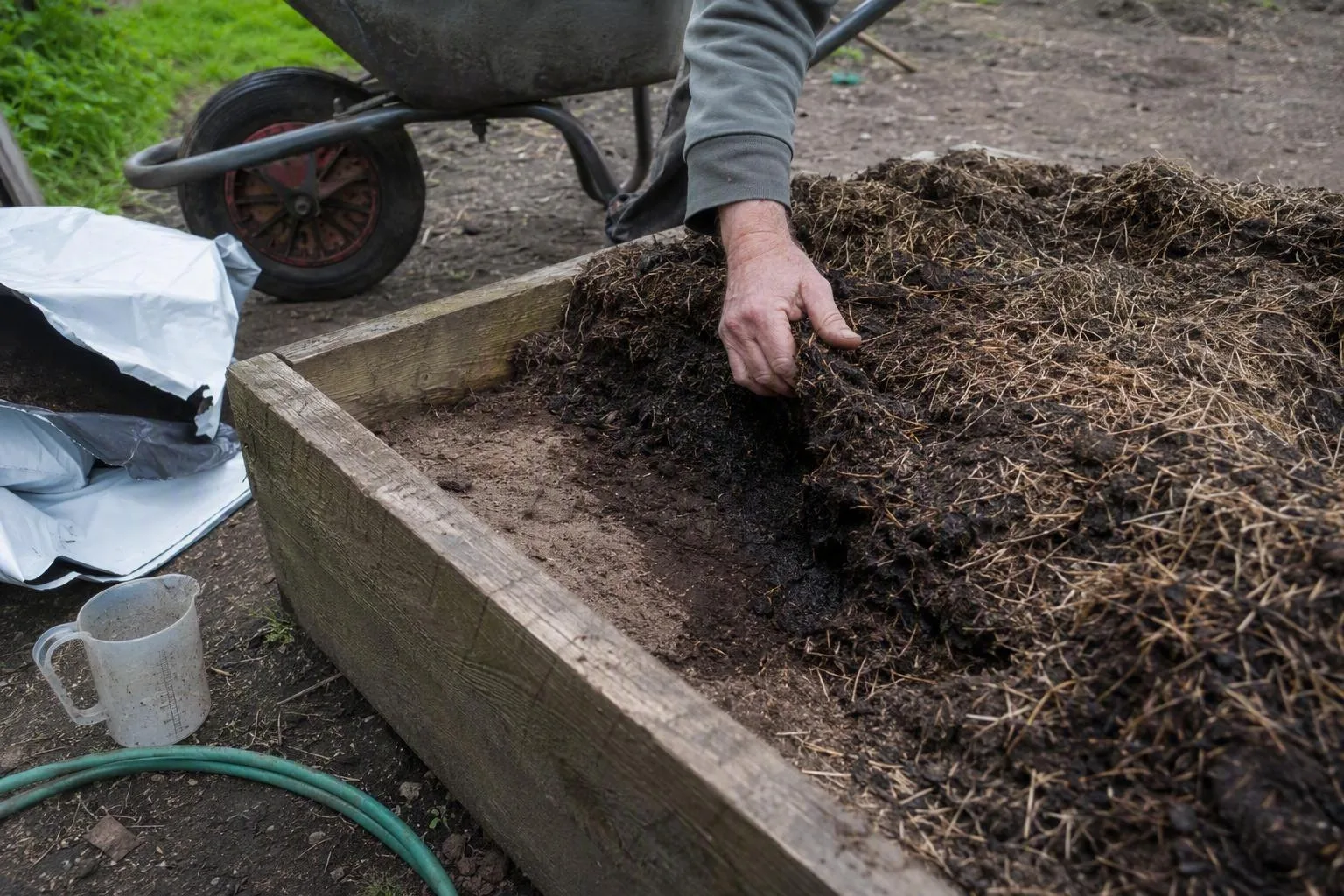
Why the soil bill can improve after year one—and when it does not
Soil is not a finished substrate. Roots create channels; fungal strands and organic residues help bind particles; earthworms and other soil life redistribute material. Mulch slows the impact of rain and reduces direct surface evaporation. Together, those processes can make a bed easier to wet evenly and less prone to crusting over one to three seasons.
That improvement depends on what you started with. A mineral soil amended with a moderate amount of mature compost can develop better aggregation as roots cycle through it. A bed made mostly from unstable compost or fine organic material may shrink substantially as that material decomposes. Adding more of the same material each year hides the symptom while extending the problem.
Top-dress rather than automatically dig in a thick layer. Surface applications preserve existing channels and let rainfall and organisms move the material downward. If you add compost for an edible crop, use finished, plant-safe compost from a known source; unfinished compost can contain weed seeds, pathogens, or compounds that temporarily interfere with seedlings.
Use How to mulch a raised bed without creating a wet, matted layer for the surface-management part of the calculation. A mulch layer that mats against stems or stays saturated can create a different set of problems, so “more mulch” isn't a complete water strategy.
A worked cost ledger for a 4 × 8 foot vegetable bed
Here is a transparent example, not a universal price list. Replace every dollar amount with a local quote before deciding. The example assumes a 4 × 8 foot footprint, a 12-inch internal depth, a timber frame, purchased bulk growing medium, a simple drip or soaker setup, and a surface mulch.
| Item | Planning assumption | What to record locally |
|---|---|---|
| Frame | Boards, corner hardware, and fasteners | Material price and expected replacement interval |
| Growing medium | About 32 cubic feet before allowance for settling | Bulk delivery, bag volume, or handling charge |
| Irrigation | One supply connection plus lines and fittings | Hardware, timer, filter, and repair parts |
| Mulch | Enough for the 32-square-foot surface | Material, delivery, and annual replenishment |
| Labor | Assembly, filling, leveling, and setup | Your hours or a realistic hired-labor rate |
Suppose the frame, soil, irrigation, and mulch together come to $420 in your local quotation, and you value installation at $60 of your time. The first-year ledger is $480, not the frame price printed on the lumber receipt. If annual compost and mulch cost $35 and the irrigation line needs $10 of replacement fittings, the recurring materials ledger begins at $45 per year. Those figures are assumptions for the calculation, not a claim about what a raised bed costs everywhere.
Now compare production honestly. If the bed supplies $80 worth of produce that you would otherwise buy, the simple cash gap is not erased in one season. If it also lets you plant earlier, prevents a crop failure in contaminated soil, or saves repeated digging and weeding, those benefits belong in a separate practical ledger. Do not quietly convert convenience into cash and then call the arithmetic objective.
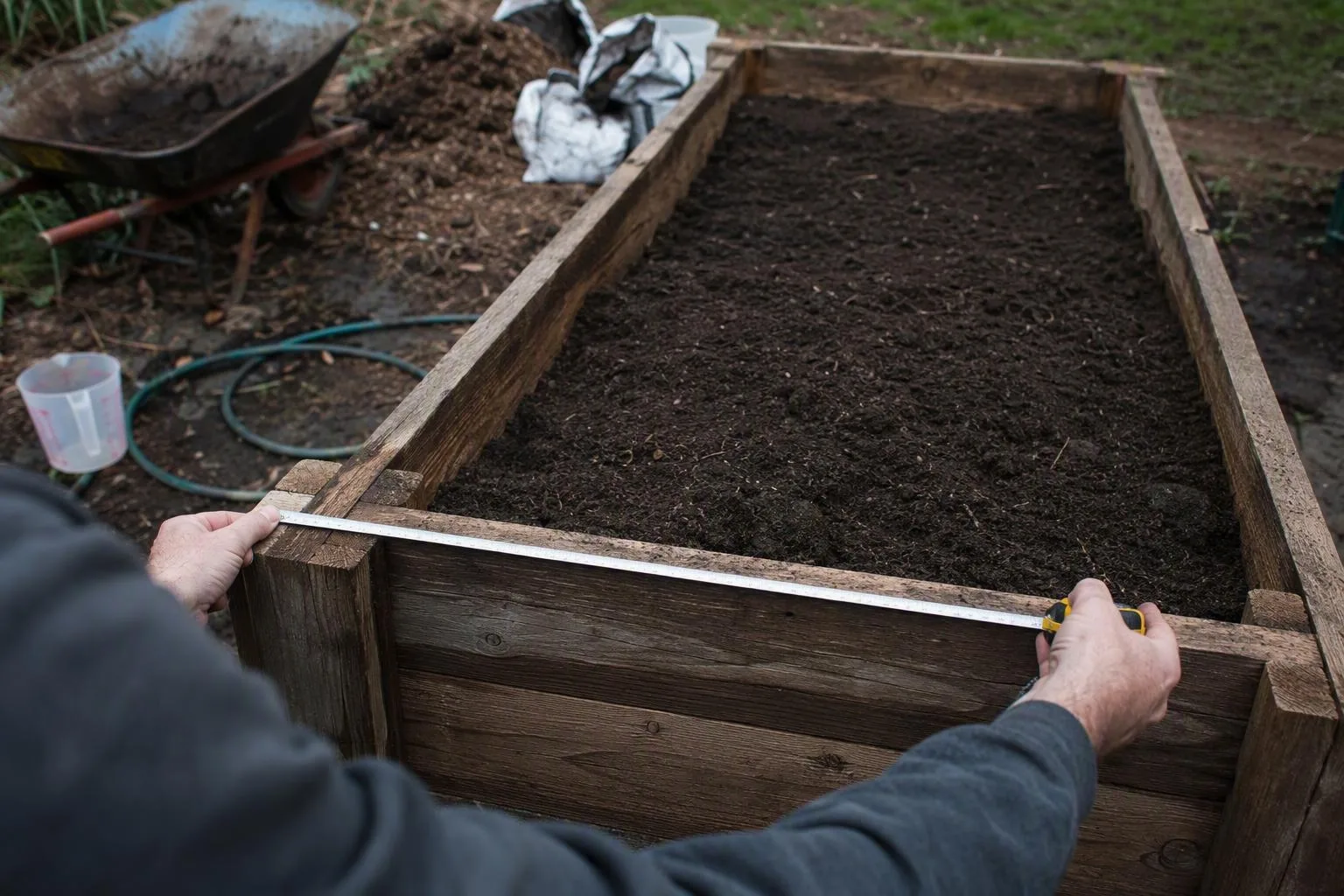
The water bill is not only the tap bill
Water has a direct price where it is metered, but the larger household cost can be time. A bed that needs hand watering every other day during hot weather may consume less water than a lawn while consuming more attention than you can reliably give it. Missed watering followed by a rescue soaking is also a poor test of efficiency: it stresses plants and makes the next irrigation harder to judge.
Count setup and maintenance. A hose route may cross paths and need moving. A drip system may need flushing, pressure control, and seasonal storage. Mulch reduces exposed soil, but it must remain loose enough for water to pass through. Shade cloth can reduce heat load during a short hot spell, while closer plant spacing can shade soil once crops are established. Both change the timing and amount of irrigation, but neither removes the need to inspect the root zone.
Rainwater capture may alter the cash calculation, but local rules, roof material, storage space, mosquito control, and safe use all matter. Check local water-utility or government guidance on residential water rates and rainwater harvesting rules before buying a tank. For edible crops, use only water you know is suitable for food production, and follow local guidance where roof runoff or stored water quality is uncertain.
Where raised beds earn their keep
A raised bed can justify its bill without producing a measurable cash profit. It may make wet spring soil workable earlier, keep foot traffic out of a planting zone, or give roots a predictable texture where native ground is heavy and compacted. Those are real gains, but they are not all yield gains.
Accessibility is a separate benefit. A higher edge can reduce bending and make crop inspection easier. That may determine whether the bed is weeded and harvested on time. A low framed bed can also organize intensive spacing and succession planting, particularly when paths are permanent and the soil is never walked on.
Control over poor or suspect ground is stronger still. Imported soil can separate crops from contaminated native soil, but only if the bed has enough depth and a suitable barrier or site design for the specific contaminant. “Raised” by itself is not a remediation plan. If the concern is contamination, obtain local advice about testing and safe crop choices.
Protection is another possible return. A rigid frame can support netting, hoops, or a slug barrier. The value comes from the crop saved and the pest pressure reduced, not from the frame's appearance. A raised bed that merely raises the plants without changing access, soil, or protection has a thinner case.
When the cheaper option is no bed at all
Choose in-ground cultivation when native soil drains adequately, is safe for the crops you intend to grow, and can be improved with compost and mulch. It generally gives roots access to a larger moisture reservoir and avoids the cost of enclosing and filling a separate volume.
Choose a broad unframed bed when you need permanent growing areas but not retaining walls. Mounded rows can improve drainage with less material, though they may slump and need reshaping. Choose a shallow framed bed when the main need is a clear edge, cleaner paths, or a modest improvement to the topsoil. Choose a deep isolated box when the ground below is genuinely unusable, access requires height, or the crop system benefits enough to justify imported soil and irrigation.
My decision rule is simple: if the site problem is drainage, first ask whether a shallow mound, open-sided bed, or drainage correction solves it. If the problem is contamination or access, the frame may be worth the expense. If the problem is only that the soil looks untidy, keep the money and improve the ground you already have.
Plan the crop sequence before construction. Intensive beds can accumulate crop-specific pests and nutrient demands if the same plant family occupies the same strip repeatedly. A four-year crop rotation for intensive raised-bed vegetables can help you decide whether the permanent layout supports the crops you actually eat.
Run your own two-season payback test
Do not wait for a universal verdict. Run a small comparison for two seasons if the space allows: one raised bed and one in-ground or broad-bed control with the same crop type. Record installation cost, purchased soil, compost, mulch, irrigation repairs, watering events, labor minutes, usable harvest, and failed plants.
During comparable dry periods, compare watering records rather than impressions. At harvest, weigh or count only produce you would genuinely use. Put labor in a separate column so a bed that costs more but saves time is visible instead of being forced into a false cash calculation.
At the end of the second season, ask three questions. Did the bed solve the original site problem? Did its water demand fit the time and supply available? Did the soil become easier to manage, or did it keep demanding imported material? If the answer to all three is no, the next investment should probably be in the ground, the mulch, or the irrigation design—not another taller box.
The most useful raised bed is not the deepest or most expensive one. It is the smallest structure that changes the constraint you actually have.