Powdery Mildew on Grass? Fix the Shade and Airflow First
Powdery mildew on grass is usually a light-and-air problem before it is a spraying problem. If the white coating brushes off like flour, appears on shaded blades, and is worst where a wall, hedge, or low tree canopy holds still air, prune or open the site first; a fungicide may suppress symptoms without making that patch suitable for turf.
One useful field detail is the water-bead test: put a clean blade between your fingers and examine it after about 15 seconds. Powdery mildew remains a dry, dusty coating. Dew, irrigation residue, and soil splash either bead, smear, or disappear as the blade dries. That small distinction prevents you from treating ordinary moisture as a disease.
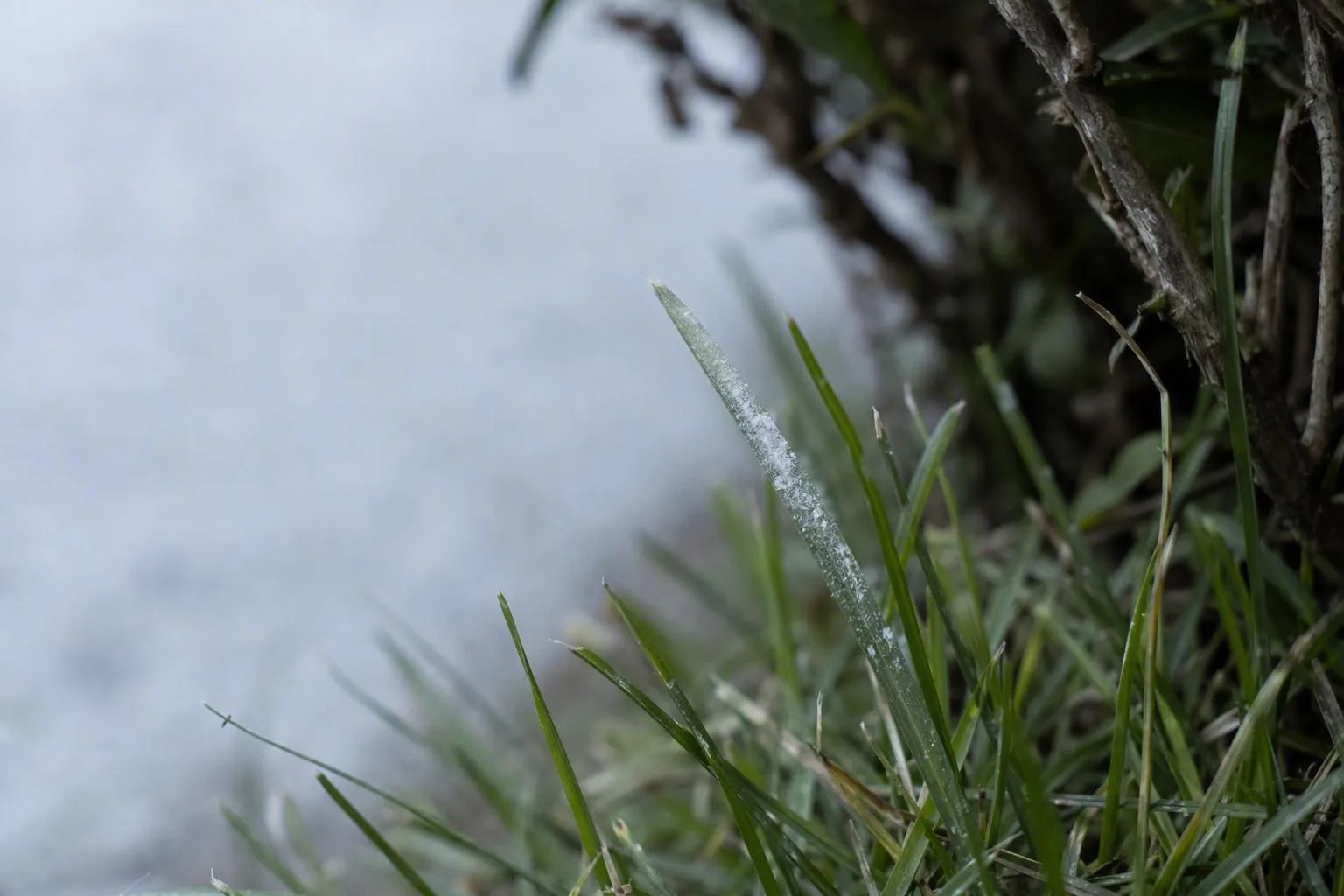
The white coating is a clue, not the diagnosis
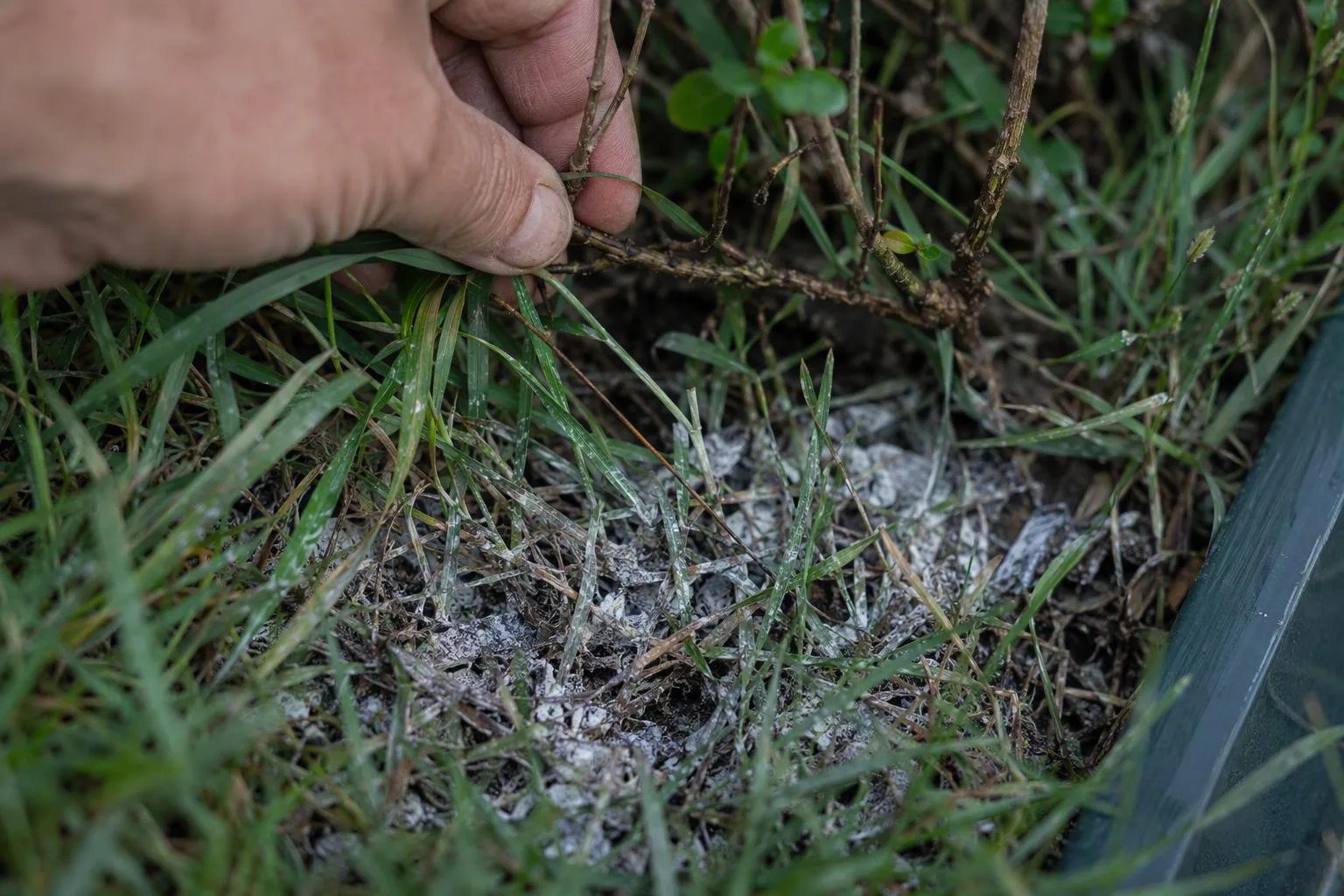
Genuine powdery mildew on turf looks like scattered white flour on the upper surface of grass blades. Individual blades may show pale patches first, followed by a thin, continuous film. The coating is usually more obvious in a shaded pocket than in the open lawn beside it. As the infection persists, affected leaves can yellow, become less vigorous, and contribute less to the stand.
Start with the blade, not the whole lawn. Use a hand lens if you have one, but you can do a useful first check without it:
- Powdery mildew: a dry white growth sits on the leaf surface and can often be disturbed with a fingertip.
- Dew or irrigation residue: droplets reflect light, feel wet, and change as the blade dries.
- Soil or mower dust: the material is usually concentrated on lower blades and rubs off as a dirty streak rather than a powdery film.
- White fungal threads in thatch: these sit among dead stems at the soil line, not as a flour-like coating across living blades.
Do not confuse powdery mildew with every pale patch in a shaded lawn. Nitrogen stress tends to produce an overall washed-out yellow-green colour rather than a discrete surface coating. Compacted soil can thin the stand and expose soil without creating white growth. Leaf-spot diseases may produce lesions or dark flecks rather than a removable powder.
Pythium blight belongs in a different category altogether. It is a hot-weather disease concern associated with stressed turf and wet, humid conditions, but it is not a white powdery coating on grass blades. Its inclusion in a diagnosis matters because a gardener who sees a rapidly collapsing, greasy, or water-soaked patch during hot weather should not assume mildew and wait for shade correction to solve it. That is a reason to inspect the pattern and weather before applying anything.
The immediate response is simple: stop adding random treatments, photograph the blades, and inspect the light and airflow around the affected patch. Powdery mildew needs living plant tissue and a favourable microclimate. Removing one of those conditions is usually more durable than repeatedly removing the visible coating.
A 30-minute shade-and-airflow audit for the affected patch
“Improve airflow” is advice too vague to act on. Instead, map what the patch experiences. You are looking for a combination of limited direct light, slow-moving air, and grass that stays humid around the leaf surface.
- Mark the patch. Put four small sticks around the worst area and compare it with a nearby healthy strip of the same grass. Similar soil and mowing conditions make the comparison useful.
- Record the light. Check the patch in the morning, around midday, and late afternoon. Write down whether direct sun reaches the grass or whether the area receives only bright reflected light. Repeat on one clear day if possible; a single cloudy observation can mislead you.
- Look above the blades. Note low branches, dense hedges, vines, and broad leaves hanging over the turf. The question is not simply whether a tree is present. Ask which obstruction blocks the most useful portion of the day.
- Check the edges. Fences, walls, sheds, and tightly clipped shrubs can create a still-air pocket even where the centre of the lawn looks open. Compare the diseased edge with the exposed side of the same obstruction.
- Test the surface moisture. Touch the blades early in the morning and again after the surrounding lawn has dried. Persistent dampness in one pocket points toward a microclimate problem, though it does not identify the disease by itself.
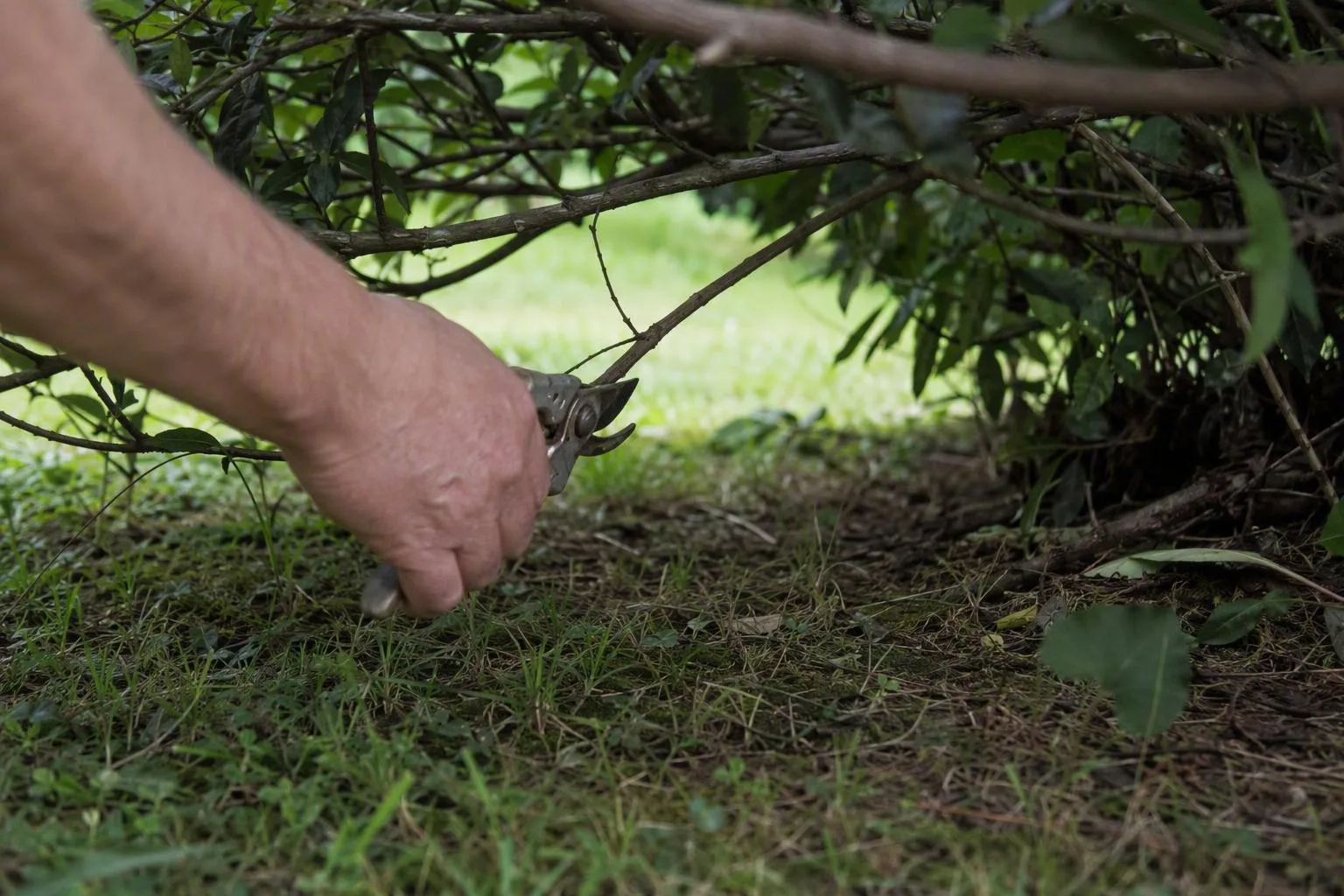
Pruning is the first fork in the decision. If one or two low branches block light and can be removed without damaging the tree, selective pruning may improve the site. If a hedge is the barrier, thinning its face may open air without stripping it bare. Do not cut major limbs or alter a protected tree casually; use a qualified arborist where the work is beyond light branch removal or where the tree’s structure is uncertain.
The second fork is more consequential. If the patch receives only weak reflected light for most of the day, no mowing adjustment can turn it into a vigorous full-sun lawn. Grass leaves need enough light to replace the carbohydrates they spend growing and recovering from mowing. Raising the mowing height can protect a weak stand, but it cannot compensate indefinitely for a site that supplies too little energy.
Use this decision rule: prune or thin where the obstruction is local and safely changeable; improve the mowing and irrigation pattern where light is adequate but the turf is stressed; replace the turf where the shade is structural and persists through the growing season. The last option is not failure. It is a better match between plant and site.
Repair the growing conditions before reaching for a fungicide
Make the changes in an order that matches how quickly they can alter the leaf environment. A cut branch may change light immediately, while rebuilding a thin root system takes weeks and replacing a failing planting takes a season.
1. Stop scalping the shaded grass
Raise the mower within the safe mowing range for the species rather than removing a large proportion of the blade at once. Shaded grass generally benefits from retaining more leaf area because each remaining blade has less light available for photosynthesis. The practical limit is the grass itself: a height that leaves the stand floppy, wet, and matted can create a new problem.
Never use a height increase as permission to let the lawn become a tangled mat. Mow often enough that the cut is modest, keep the blades sharp, and remove clumps that sit on already damp turf. For a mowing-specific decision, use How High Should You Mow Shaded Grass? rather than copying a height from a sunny lawn.
2. Change irrigation timing, not just the amount
Drought-stressed grass still needs water. The useful adjustment is to water when the root zone needs it and to begin early enough that the leaves dry during the day. Frequent light watering can keep the upper canopy repeatedly damp without encouraging deep rooting. In a shaded site, evaporation is slower, so the same schedule used on an exposed lawn may leave the surface wet for longer.
Check the soil with a finger or narrow trowel several centimetres below the surface, then water thoroughly when the root zone is becoming dry rather than following a fixed daily routine. Avoid evening irrigation while powdery mildew is active unless local conditions make another schedule unavoidable.
3. Remove the material that mats the canopy
Wet leaves, grass clippings, and dead stems can lie across living turf and restrict air movement at blade level. Rake gently when the lawn is dry. Aggressive raking of a thin shaded stand can tear crowns and roots, so the aim is to lift loose material, not comb the soil bare.
This is also where thatch deserves a measured response. A compacted layer of undecomposed stems can slow water movement and keep the crown zone humid, but removing it during heat or drought can injure already weak turf. Check whether the layer is genuinely thick and restrictive before dethatching. Scarifying every pale lawn is a poor substitute for diagnosis.
4. Pull back on unnecessary nitrogen
Do not use a nitrogen feed to make a thin, shaded lawn look green quickly. Nitrogen pushes soft, leafy growth; that growth can create a dense, humid canopy and may be more vulnerable when light is already limiting. The practical sequence is to test or review the soil and recent applications first, then feed only when there is a clear nutrient reason and the grass is actively growing.
That does not mean nitrogen causes every case of mildew. It means excess feeding is a poor rescue strategy for turf whose basic energy supply is inadequate. If the grass is yellow as well as coated, separate the questions: use Yellow Lawn Grass in Shade: Separate Nitrogen Stress from Poor Light to decide whether colour and disease are being wrongly bundled together.
5. Prune for the season, then judge the site
Removing an overhanging branch can reduce shade and improve air movement at once, but the turf may not fill in immediately. Existing weak crowns need time to produce stronger leaves, and bare areas may need reseeding during a suitable establishment window. If the shade comes from a building, mature hedge, or permanent canopy, maintenance can only moderate the problem.
Give the altered site enough time to show whether the grass can recover, but do not keep spending inputs on a strip that fails the light test year after year. In deep shade, a groundcover, mulch area, woodland planting, or path can be more functional than a permanently thin lawn. If you still want grass, choose a species or mixture sold for the light conditions in your region rather than treating “shade tolerant” as an unlimited claim.
A useful rule of thumb for the whole repair sequence is this: improve the air above the grass before trying to improve the colour of the grass. Colour is easy to manipulate with feed; the leaf environment is what determines whether that improvement lasts.
When the lawn will not cooperate: treatment, reseeding, or a different planting
Once shade and airflow have been addressed, choose an endpoint instead of drifting into indefinite treatment. For a small home lawn, a labelled fungicide is usually a secondary tool because it may protect new growth without correcting the conditions that made the disease possible. If the patch is already thinning, reseeding or changing the planting may give more durable value.
Use the weather and the plant’s response as your guide. In cool-season turf, powdery mildew pressure is more biologically plausible during mild, humid spring or autumn conditions than during the hottest, driest part of midsummer. Hot weather can bring other turf diseases, including Pythium blight, but that is not a reason to call every summer patch mildew. If new leaves emerge clean after the site dries and opens, monitor rather than automatically spraying.
If a product is genuinely justified, use only one whose current label includes the turf, disease, and application site. Product formulations and registrations vary by jurisdiction, so check the product label for the permitted rate, interval, protective equipment, and re-entry directions; do not substitute a garden spray or a household mixture. Follow the label exactly, and keep people and pets off treated turf until the label says it is dry or otherwise safe to re-enter.
Homemade baking-soda or dish-soap sprays are especially poor bets on a lawn. Concentration, water quality, temperature, and grass species can change the risk of leaf injury, while an untested mixture gives you no reliable disease-control interval. Correcting the site is the safer experiment; if chemical treatment is needed, use a legally labelled turf product and keep the record of what was applied.
Use this follow-up calendar:
- After 7 days: inspect new leaves, not just the old coating. Check whether the patch is still wet at the same time of day and whether pruning or irrigation changes altered that pattern.
- After 3 weeks: compare density, colour, and fresh growth with the marked healthy strip. A surviving stand may look better before it fills bare soil; do not overfeed to accelerate the visual result.
- Next suitable seeding season: overseed only after choosing a grass suited to the available light and preparing the soil surface. For timing in a cool-season lawn, see Best Time to Overseed a Thin Lawn in Cool-Season Climates.
- Next growing season: if the same shaded strip again develops mildew and remains thin despite improved airflow, stop treating it as a turf problem. Replace the planting or redesign the edge.
That last decision is the one most gardeners postpone. A lawn is not obliged to occupy every square metre simply because it once did. If the light audit says the site cannot support dense grass, a shade planting is not giving up on the garden; it is removing the condition that keeps inviting the same diagnosis.
Three questions that settle the next move
Can powdery mildew kill grass?
A light infection does not necessarily destroy an established turf stand. The more useful concern is repeated thinning: a shaded plant has less energy available for recovery, and persistent leaf disease reduces the healthy green surface still further. If crowns remain alive, the grass may recover when conditions improve. If bare soil keeps expanding, treat that as a site-selection problem rather than a cosmetic one.
Should I water grass with powdery mildew?
Water it when the soil and weather indicate a need, not because the leaves look ill. Drought stress can weaken the stand, while frequent irrigation that leaves the canopy humid can prolong the conditions you are trying to remove. Water early enough for the foliage to dry and check the soil before deciding on the next irrigation.
Will baking soda or dish soap cure powdery mildew on a lawn?
Do not assume a household spray is harmless because the ingredients are familiar. It can injure grass and does not carry the tested, labelled directions expected of a turf treatment. Start with the shade-and-airflow audit; if treatment remains necessary, use only a product labelled for that exact use.
Save the audit checklist before you start pruning: mark the patch, record the light, inspect the barriers, check blade moisture, adjust mowing and irrigation, then reassess new growth. The next decision is not “Which spray kills the white coating?” It is “Can this square metre receive enough light and moving air to justify keeping it as lawn?”
Frequently Asked Questions
Can powdery mildew kill grass?
Explain that established turf often survives a light infection, but repeated disease in deep shade can thin the stand by reducing photosynthesis and encouraging competition from other problems; distinguish cosmetic damage from actual stand loss.
Should I water grass with powdery mildew?
Answer that drought-stressed turf still needs water, but irrigation should be scheduled early enough for foliage to dry and should not create persistently wet, humid conditions; use soil and weather rather than a fixed daily schedule.
Will baking soda or dish soap cure powdery mildew on a lawn?
State that homemade sprays can injure grass and lack the consistency of a product tested and labelled for turf; recommend correcting shade and airflow first and using only a legally labelled treatment if one is genuinely needed.